
Years ago, after the Bush administration initiated the Deep State’s surveillance regime via the Patriot Act, I observed that the left and right in this country seemed to be competing to see who could censor the most speech. Since then, the left has forged far ahead in the censorship race, with the rise of cancel […]
Read More
As a countermeasure to action civics, which aims to convert the “traditional subject of civics into a recruitment tool of the progressive left,” it is crucial for students to engage in civic behavior actively. This behavior, rooted in a nonpartisan American pluralism, accentuates the rights and duties of citizenship in various spheres-school, home, community, and […]
Read More
As with negative rights, there’s a lot of confusion regarding natural law. People use the term without much explanation of what it means, and those of us who are not trained lawyers or legal historians don’t want to reveal our ignorance by asking for clarifications. This is my attempt as a non-specialist to explain what […]
Read More
Closing “diversity, equity, and inclusion” (DEI) offices around the country is a powerful step in halting the illiberal and divisive harm-centric monoculture that has taken over higher education. However, there remain far too many student-facing administrative offices that seek the same goals. Whether in residential services or student life offices, administrators wield significant power and […]
Read More
“For in politics, as in religion, it is equally absurd to aim at making proselytes by fire and sword. Heresies in either can rarely be cured by persecution.” —Alexander Hamilton, Federalist 1 All university-level students should read, study, and discuss The Federalist Papers (1787–88). This most sacred document of the American founding explains the logic […]
Read More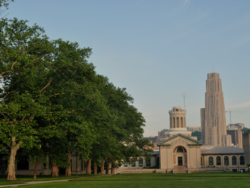
Editor’s Note: This is an excerpt from an article that was originally published by Pittsburgh Post-Gazette on April 18, 2024. It is crossposted here with permission. After the Oct. 7 attacks on Israel, universities with close ties to Middle Eastern governments have faced heightened scrutiny. In February, Texas A&M University announced it would close its […]
Read More
Many philosophers, social thinkers, legislators, and those delirious with power have proposed ways to fix the human condition. Societies themselves have often been organized, often by custom as well as laws, to shape the odd ways in which humans behave—odd ways that often emanate from a desire for individual freedom. Those fixes and organizational principles […]
Read More
Author’s Note: This excerpt is from my weekly “Top of Mind” email, sent to subscribers every Thursday. For more content like this and to receive the full newsletter each week, sign up on Minding the Campus’s homepage. Simply go to the right side of the page, look for “SIGN UP FOR OUR WEEKLY NEWSLETTER, ‘TOP […]
Read More
Calvin Coolidge said it best: “To live under the American Constitution is the greatest political privilege that was ever accorded to the human race.” Every American should know that wonderful truth. Learning it should be the keystone of social studies instruction in our schools. That’s why the Civics Alliance and Freedom in Education are publishing […]
Read More
In most parts of the world, lawyers are formally trained in an undergraduate degree program. The Bachelor of Law (LL.B), is also an accelerated three-year curriculum. In the United States it takes over twice as long. First you need a 4-year undergraduate degree in any subject—a gratuitous requirement, as there is no such thing as […]
Read More
Editor’s Note: The essay below is a revised and edited version specifically tailored for Minding the Campus. It has been updated from its original publication on The Berea Torch. At a liberal arts college dedicated to the unfettered pursuit of truth, it is “baffling” that tribalism and ambiguity accompanied by a lack of concern for […]
Read More
Much has been made of recent decisions to re-require ACT or SAT scores in student applications to several elite Northeastern colleges. Start of a trend? Will more colleges now follow suit? Covid-19 accelerated an already-existing trend toward adoption of “test optional” admissions, whereby college aspirants could choose whether to include their ACT or SAT scores […]
Read More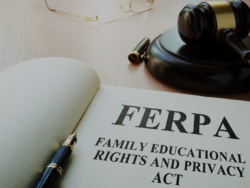
Editor’s Note: This article was originally published by The College Fix on April 3, 2024 and is crossposted here with permission. A relatively new report outlines how universities nationwide have signed over students’ private FERPA data to a third-party vendor that reviews their personal information to help study college students’ voting trends. The nine-page report describes how a national voting […]
Read More
Once again, the Washington Post misses the mark when it associates “zombie” CVS of Washington, D.C., or America’s shoplifting pandemic with the decline of liberal democracy. Ironically, torchbearers of modern-day progressivism are willfully oblivious to the fact that their illiberal ideology, not liberal democracy itself, is at the root of many societal problems, including urban […]
Read More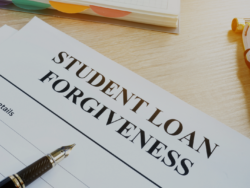
For years, I have been writing about the deficiencies of the federal student loan programs, but I thought diminishing returns were setting into my harangues—everything important had been said. But don’t underestimate the deleterious effects of disregarding the rule of law, the crassness of political ambitions, and the manifest stupidity of some of President Biden’s […]
Read More
Editor’s Note: This is an excerpt from an article that was originally published by City Journal on April 4, 2024. It is crossposted here with permission. When people hear “lineman,” they think football. At least that’s the reaction Keith Henderson receives when he teaches Philadelphia schoolchildren about jobs in the skilled trades. Henderson, who leads […]
Read More
Editor’s Note: David Randall’s Curriculum of Liberty illuminates the pressing demand for American higher education to equip students with essential knowledge, character, and tools needed to confront contemporary challenges, revitalize the American republic, and safeguard Western heritage alongside the principles of free inquiry. This essay draws inspiration from his groundbreaking work and marks the inaugural […]
Read More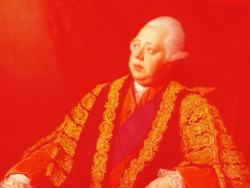
The nation’s 250 Anniversary is only 29 months away. The National Association of Scholars is commemorating the events that led up to the Second Continental Congress officially adopting the Declaration of Independence on July 4, 1776. This is the sixth installment of the series. Find the fifth installment here. “His Majesty trusts that no opposition […]
Read More
The era of Big Science began formally in 1950, when the National Science Foundation opened its doors. Its mission was to fulfill a hopeful promise: for government to fund the very best academic science, to explore science’s “endless frontier,” in the inspiring words of Vannevar Bush, President Roosevelt’s—and subsequently President Truman’s— science czar. There was […]
Read More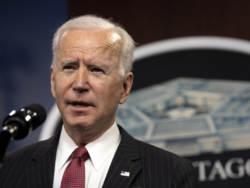
Editor’s Note: This article was originally published by The College Fix on April 8, 2024 and is crossposted here with permission. ‘Single campus bureaucrat’ would be ‘judge and jury’ Pending Title IX changes threaten free speech and due process, according to several legal experts who spoke to The College Fix. The administration’s submitted updates to Title IX of the Education […]
Read More